Authentic Korean kimchi: Spicy fermented napa cabbage
Stepping inside a bustling, steam-filled home kitchen in Seoul right as the autumn Gimjang harvest season hits its absolute peak introduces you to a true culinary phenomenon. Today, we are mastering an absolute blockbuster preservation masterpiece that has triggered a permanent, frantic obsession across modern lifestyle food blogs: authentic Korean Kimchi. Originally perfected as an ancient, rustic survival strategy to trap raw vegetable vitamins through the brutal winter freeze, massaged with a fiery botanical mash and left to ferment into a deeply complex luxury transforms humble garden greens into a certified high-impact umami showstopper.
The real stroke of culinary genius in this streamlined fermentation blueprint relies on deep cellular moisture-drawing and a stable glutinous rice paste binding process. Instead of tossing fresh cabbage directly into dry spices—which would cause the leaves to rot and bleed out a watery, bitter pool—we are heavy-salting every single layer to break down the firm plant walls until they turn completely supple. Smothered under a thick, slow-blitzed lacquer of glutinous rice flour porridge, pungent fish sauce, aromatic root shards, and vibrant Korean red chili flakes, active lactic acid bacteria wake up to lock down a sparkling sour punch. Grab your deepest mixing bowls, ready those airtight fermentation jars, and let us get this shimmering heritage classic aging away!
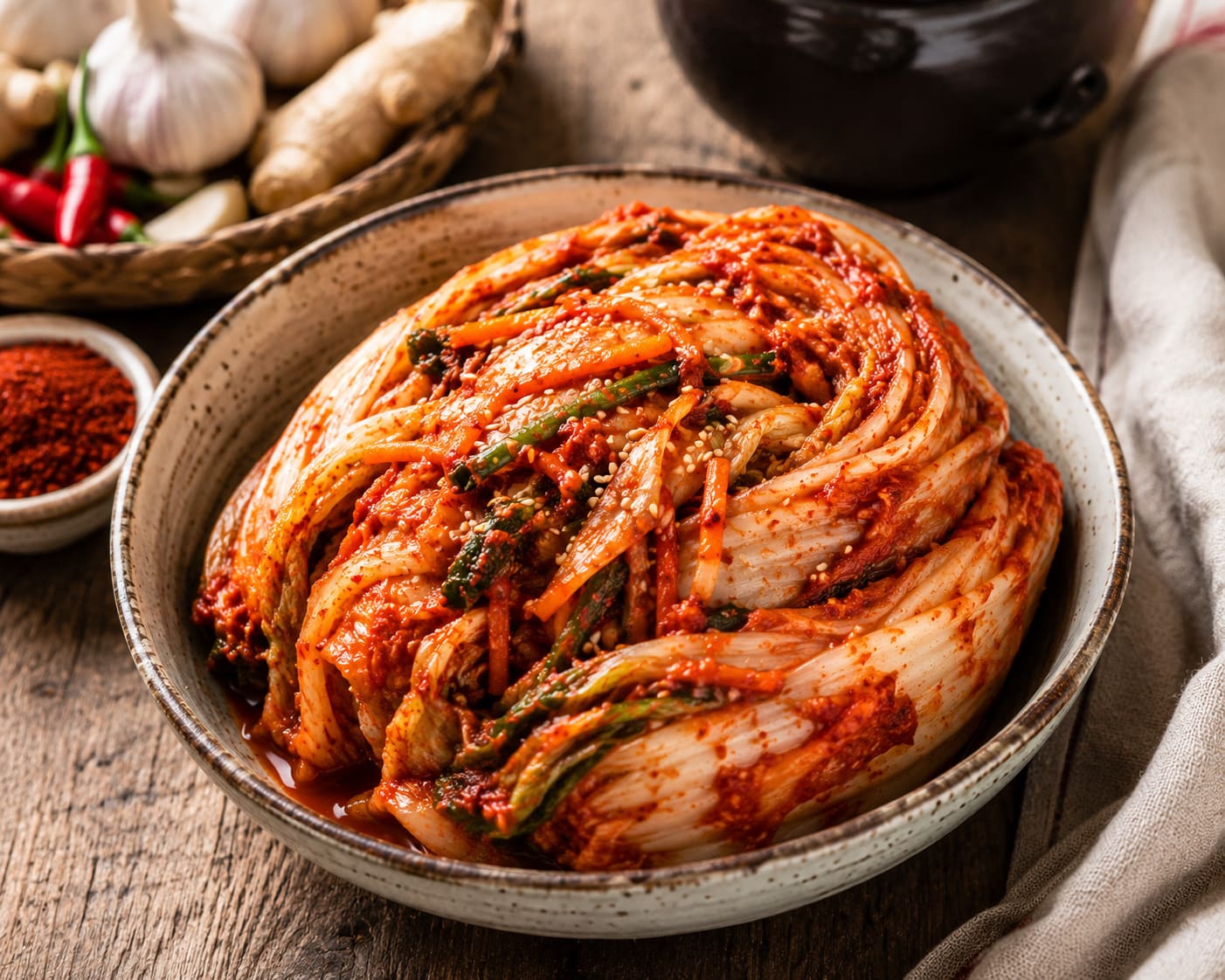
What You Need
For the Fiery Botanical Paste Matrix
- 2 tbsp authentic red Korean chili flakes (gochugaru style)
- 2 tbsp glutinous rice flour (sticky rice flour variant)
- 200 ml fresh cold water (strictly for brewing the flour slurry)
- 6 cloves fresh garlic (peeled and left whole for blitzing)
- 2 walnut-sized blocks fresh ginger root (peeled and coarsely chopped)
- 2 tbsp savory umami fish sauce (swap for no-fish sauce for a clean vegan twist)
- 15 g white granulated sugar (plus 1 extra pinch to activate the good bacteria)
For the Crisp Garden Assemblies & Mineral Curing Bed
- 1 massive head fresh organic napa cabbage (chinakohl style)
- 0.5 whole crisp daikon radish (peeled and sliced thin)
- 3 whole fresh green scallions (cut into long strips)
- 300 g to 400 g coarse sea salt (strictly for drawing out the cabbage moisture)
- 1 handful toasted sesame seeds (reserved strictly for the final table scatter)
Step-by-Step
Let us conquer that marathon cabbage-curing ritual first to ensure our greens turn completely supple. Place your massive head of fresh napa cabbage flat across a cutting board, slicing a short vertical line right through the tough bottom stem block, then use your bare hands to confidently rip the head completely apart into two identical halves. Fan out the single leaf layers gently, scattering a heavy rain of coarse sea salt uniformly straight into every single pocket. Plunge the salted cabbage halves into a wide bowl and let them sleep quiet on your counter for exactly 3 hours to draw out all the excess water pools.
While the cabbage cures, handle your thick glutinous rice porridge paste base. Whisk your 2 tablespoons of sticky rice flour and 200 milliliters of cold water smoothly together inside a small saucepan until no stubborn lumps remain, then place the pan over medium heat. Bring the liquid to a rolling boil under a constant, steady stir for a solid 5 minutes until the paste turns completely glassy and translucent, then slide the pot off the burner flame to cool down to room temperature.
Now, let us construct our pungent chili-root lacquer reduction. Drop your cooled rice porridge paste, white granulated sugar, savory fish sauce, peeled garlic cloves, and chopped fresh ginger shards straight into a deep mixing cup, using a high-speed stick blender to blitz the matrix aggressively into a smooth, bright-red paste mirror. Slice your peeled daikon radish bulb and fresh green scallion stalks into clean, uniform 4-centimeter long thin matchsticks, folding the raw garden crops directly into the red chili lake using a spoon.
Pluck your cured napa cabbage halves out of their bowl floor. Chef’s Critical Washing Secret: The leaves will now look completely soft, limp, and bendable—rinse the salted cabbage thoroughly under cold running water multiple times to wash away every single trace of surface salinity, then squeeze the leaves hard to express all trapped moisture before patting the greens bone-dry over paper towels!
Pull a pair of protective rubber kitchen gloves tightly over your hands to shield your skin from the intense chili oils. Lay the dry cabbage halves flat across your workbench, using your fingers to massage and smear a generous layer of your loaded red chili paste matrix uniformly straight between every single leaf layer, ensuring no pale spot remains hidden inside the folds. Roll the loaded cabbage halves tightly from bottom to top into dense, compact log cylinders.
Pack the rolled cabbage logs and any remaining bowl juice tightly straight into a clean, airtight glass fermentation jar, pressing the greens down aggressively with your fists to expel any trapped oxygen pockets so the liquid rise covers the cabbage crown. Seal the lid tight and let the jar stand quiet at room temperature for exactly 1 to 2 days to kickstart the active fermentation bubbles, then plunge the jar into the deepest corner of your fridge to mature for a patient minimum of 1 week—though leaving it undisturbed for a full 4-week sleep will yield absolute umami perfection! Slice into bite-sized wheels, scatter toasted sesame seeds across the crown, and dive straight into pure Korean comfort paradise!