Royal Bavarian Almond Panna Cotta: Vintage King Ludwig Blanc Manger
Step into the gilded dining halls of Neuschwanstein Castle on a snowy nineteenth-century winter evening, and you would instantly catch the elegant scent of this exact culinary masterpiece drifting out of the royal kitchens. Today, we are conquering a spectacular, historical showstopper that has triggered a massive, permanent obsession across modern dessert blogs: authentic Bavarian Almond Panna Cotta, classically known as Mandelsulz or Blanc Manger. Famously preferred by King Ludwig II of Bavaria, this regal treat rescues a rare medieval pastry craft that legendary culinary gods like Escoffier and Bocuse deeply mourned as a lost art.
The real stroke of culinary genius in this specific kitchen blueprint relies on raw nut-pureeing and an electric, floral botanical finish. Instead of messing around with chemical flavor drops, we are mashing real blanched almonds alongside rare bitter almonds directly into fresh milk, steeping the pulp inside boiling sweet cream, and pressing the wash through a fine cloth to build an incredibly smooth dairy matrix. Locked together under a quiet gelatine chill and laced with a golden thread of orange blossom water, it cuts like absolute velvet and melts on the tongue like a dream. Grab your kitchen blenders, ready your dessert cups, and let us get this shimmering historical luxury cooling!
What You Need
For the Intense Almond Dairy Matrix
- 100 g blanched sweet almonds
- 6 raw bitter almonds
- 200 ml fresh whole milk
- 400 ml rich sweet heavy cream
For the Sweet Botanical Set & Finish
- 3 tbsp white granulated sugar
- 2.5 sheets premium leaf gelatine
- 1 tbsp fragrant orange blossom water (or premium fruit liqueur)
- As needed fine almond oil (strictly optional, for coating the molds)
Step-by-Step
Let us build that intense almond dairy foundation first to unlock the deep orchard oils. Drop both your sweet blanched almonds and your bitter almonds into a blender or food processor along with your whole milk, blitzing the layers on high speed until it transforms into a completely uniform, fine nut-puree pool. Bring your heavy cream to a brief, roaring boil inside a medium saucepan over high heat, then immediately stream your raw almond milk straight into the hot pan. Snap a tight lid over the pan, slide it completely off the active burner, and let the mixture stand quiet to steep and bleed its fragrance for a solid 30 minutes.
Now for that silk filtration and setting routine. Submerge your leaf gelatine in a small bowl of cold water to soften. Pour your steeped almond dairy wash straight through a fine-mesh kitchen cloth or cheesecloth, squeezing the bundle aggressively between your palms to extract every single drop of clean, velvety cream back into a saucepan while discarding the spent nut pulp shards. Warm the silky milk back up gently until it hits roughly 60C (140F). Drop your sugar and the softened, squeezed gelatine sheets straight into the warm pool, whisking vigorously until completely dissolved, then fold in your aromatic orange blossom water.
Rinse small dessert cups or 60 ml pudding molds under cold running water, leaving the interiors damp. If you want the puddings to slide out absolutely flawlessly onto plates later, rub the inside walls of the cups under a tiny drop of pure almond oil instead! Ladle the fluid custard mixture evenly into the molds and slide them into your fridge to chill and lock together for a minimum of 6 hours.
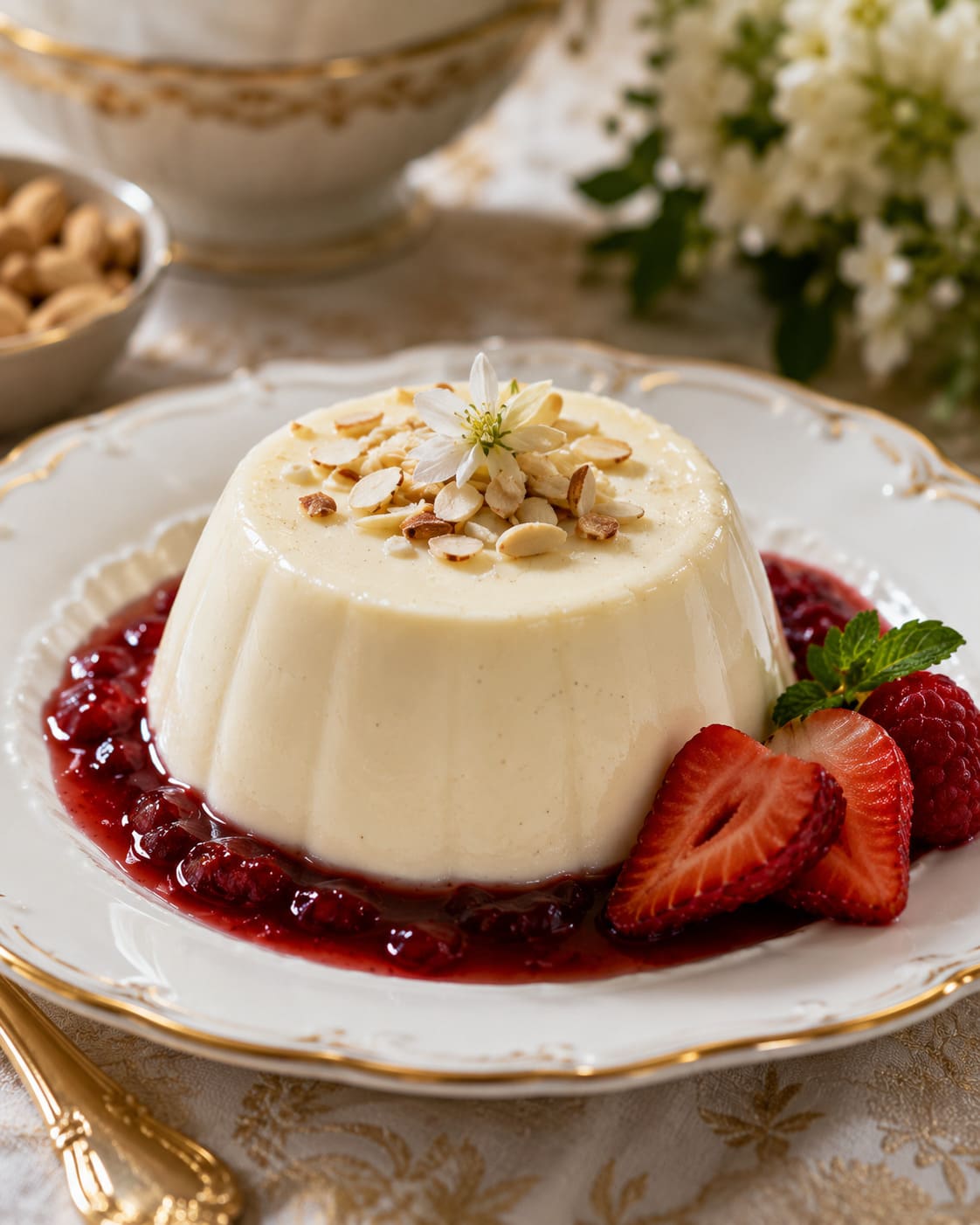
When you are ready to plate up, plunge the bottom of the cold molds into a bowl of hot water for just a brief few seconds to loosen the gelatin barrier, then flip them proudly upside down onto your presentation saucers. Crown the wobbly spheres with fresh berry compote or sliced strawberries, and dive straight into pure Bavarian royal castle paradise!